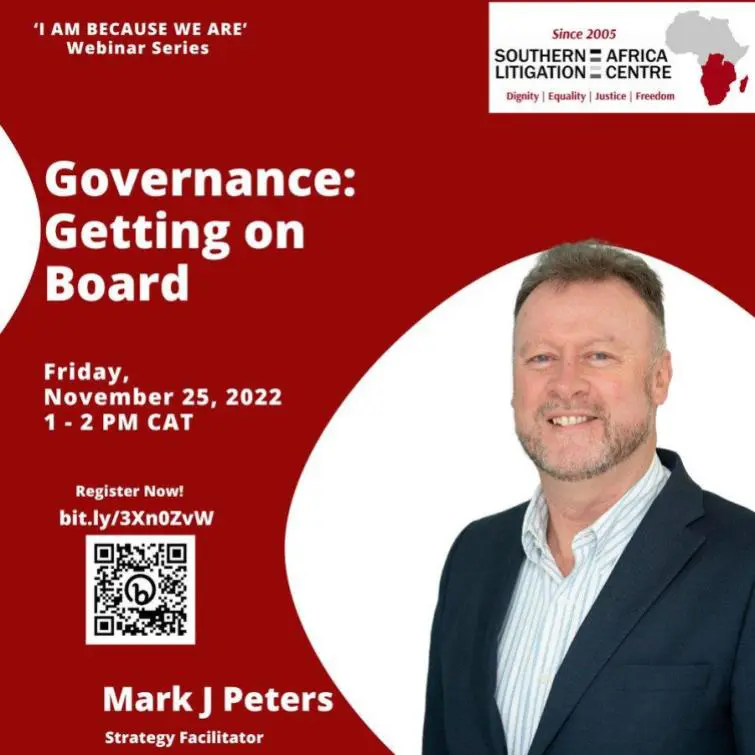
• Governance: Getting on Board

    The focus of this session will be to equip grassroots organisations and movements on matters relating to governance, specifically with the executive board. This session is in response to feedback...

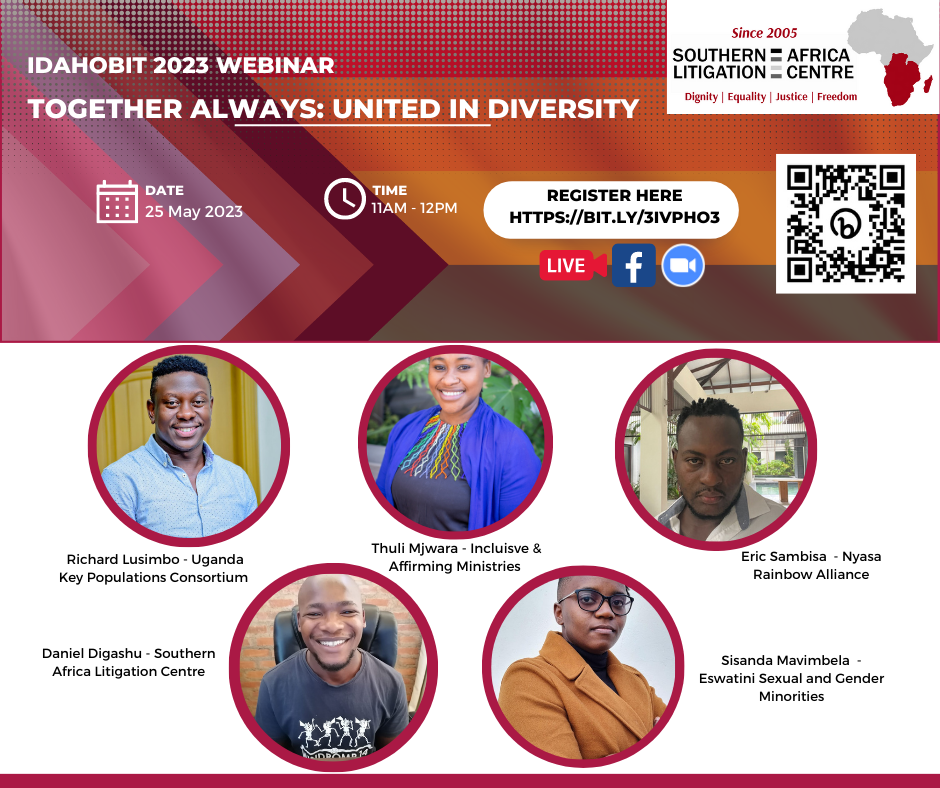
  • IDAHOBIT: Together Always: United in Diversity

    Webinar

    IDAHOBIT: Together Always: United in Diversity webinar: #IDAHOBIT was created to draw attention to the different experiences of LGBTIQ+ people. Join us this Thursday, 25 May 2023 from 11am CAT as...

  • Towards decriminalising attempted suicide offences

    Webinar

    Many countries still have the colonial offence of attempted suicide. Isn’t it time we support persons who attempt suicide instead of imprisoning them? Join our webinar on #WorldMentalHealthDay on 10...

  • CRAFTING YOUR CASE FOR SUCCESS: LITIGATING LAND RIGHTS

    SALC invites lawyers for a free 2-day online course on developing a compelling legal case for protecting displaced communities in extractive and agriculture industries. 3 and 4 July 2024  ...

  • CHAMPIONING LAND JUSTICE: STRATEGIC CASE DEVELOPMENT

    SALC invites CSOs for a free 3-day online course on documenting evidence for strategic legal cases, for protecting communities affected by displacement from agriculture industries. 3 To 5 July 2024...

  • Fouth regional activist forum

    Southern Africa Litigation Centre President Place 1 Hood Avenue/ 148 Jan Smuts Avenue Rosebank, Johannesburg, Gauteng, South Africa

    The fourth activists’ forum, SALC and its partners will reflect on the effectiveness of the incremental approaches to decriminalisation, assess the impact of the recent and ongoing court cases on...

  • Webinar: A conversation with magistrates and police in Malawi

    Webinar

    In Malawi, the police are the primary point of reach for anyone seeking justice, vulnerable and marginalised groups face a significant number of barriers in accessing justice. The webinar aims to explore how magistrates and police officers under the Umunthu Project are tackling justice access disparities for sexual minorities, identifying personal, structural, or institutional barriers.