
Modern Ghana (31 March 2026)
Washington Blade (1 April 2026)
Botswana Guardian (3 April 2026)
Mamba Online (3 April 2026)
Ghana’s mission to have the United Nations recognise the trafficking of enslaved Africans and racialised chattel enslavement as the gravest crime against humanity is a historic milestone. The resolution adopted on 25 March 2026, with 123 out of about 180 countries in support, marks a major step toward global acknowledgement of the brutality and inhumanity of slavery. A 2022 report by the Equal Justice Initiative, ‘The Transatlantic Slave Trade’, highlights how during the slave trade, Africans who were enslaved had no rights, freedom, recognition or protection under the law. They had no voice, no bodily autonomy, no respected identity and could be brutally violated with no legal protection. This history represents a grave crime against humanity.
In my opinion, Ghana and the other countries that voted in favour are entirely right to say that such historic events cannot be sanitised or reduced to diplomatic language. Recognition is the first step towards accountability. This matter is important because it is arguably the foundation of the modern-day injustice and inequality people experience, including wealth inequality, racism, sexism, xenophobia and queerphobia.
The double standard.
Yet, despite this important step on the world stage, Ghana’s commitment to human rights appears inconsistent. The same government advocating for justice for enslaved Africans is enacting laws that jeopardise the rights of Africans today. This contradiction between Ghana’s international stance and its domestic policies is at the heart of the discussion.
In February 2026, the Ghanaian parliament formally received the Human Sexual Rights and Family Values Bill. The bill is a grave threat to the rights to non-discrimination, protection under the law, privacy and freedom of association, assembly and expression. It expands criminalisation of LGBTQ+ people and anyone associated with them. This Human Sexual Rights and Family Values Bill calls for a three-year imprisonment for anyone who identifies as LGBTQ+, anyone who has gender affirming treatment, anyone who enters into a same-sex marriage or attends a same-sex wedding and anyone who promotes equal rights for LGBTQ+ people. It turns enforcement into a societal obligation rather than just a state function, encouraging people to report anyone who looks suspicious or different. This further legitimises the brutal attacks on LGBTQ+ people socially, which leaves the people of Ghana with blood on their hands.
Ghana’s proposed and reintroduced anti-LGBTQ+ legislation is said to be among the most restrictive in the world and will result in the inhumane treatment of LGBTQ+ people. It not only further criminalises consensual same-sex relations but also targets civil society organisations that are perceived to be supporting equal rights for LGBTQ+ people. So if this law passes, it will be illegal to support equal rights and challenge the inhuman treatment of queer Ghanians and allies. Is this not a double standard? Ghana seeks justice for the ill treatment of Africans during the transatlantic slave trade, but is actively in the process of seeking to harm its own people.
This is not theoretical harm, it is practical harm. According to the Human Rights Watch, LGBTQ+ people in Ghana already face systemic stigma, discrimination, harassment and violence, often enabled by both legal frameworks and social stigma, resulting in a hostile climate.
Ghana falls short of upholding human rights at home.
On the global stage, Ghana is arguing that the dehumanisation of Africans through slavery was so severe that it constitutes the gravest possible violation of human dignity. This argument rests on a core principle that reducing people to less than fully human is unacceptable under any circumstances.
Back at home, the state is endorsing laws that do exactly that to LGBTQ+ people. Criminalising identity, suppressing expression, clamping down on civic space, monitoring and surveilling citizens and advocating for social exclusion. These are elements of dehumanisation signalling that some are less deserving of protection, dignity, respect and justice. That is the definition of a double standard.
Supporters of these laws often frame homosexuality as un-African, but this claim does not hold up under scrutiny. In his article, ‘The “Deviant” African Genders That Colonialism Condemned’, Mohammed Elnaiem emphasises that historical and anthropological evidence shows that diverse sexualities and gender expressions existed across African societies long before colonial rule. Ironically, many of the laws used to criminalise LGBTQ+ people today trace directly back to the colonial-era. This is even supported by the African Court, which, in December 2020, through its Advisory opinion, made it clear that these colonial-era laws are discriminatory and perpetuated marginalisation. The African Court also called on African states to take action in this regard.
It is no secret that anti-rights actors are actively operating in Ghana and supporting leaders to advance their anti-rights agenda. They are increasingly organised, visible, well-funded and influential in shaping state policy. The upcoming 4th African Inter-Parliamentary Conference on Family and Sovereignty, scheduled to take place in Accra from 27 to 30 May 2026, is a clear example of this coordination. The conference endorses the so-called African Charter on Family Values, a deeply contested initiative that frames LGBTQ+ people as a threat to children and positions queer identities as foreign ideologies. This platform is being used to legitimise and advance anti-LGBTIQ+ legislation, restrict comprehensive sexuality education and roll back sexual and reproductive health rights. In this context, the treatment of LGBTQ+ people in Ghana cannot be viewed as isolated policy choices, but rather as part of a broader coordinated anti-rights agenda that normalises and legalises discrimination. It fuels increasingly inhumane conditions for queer communities and civil society. Ghana is simultaneously rejecting colonial injustice in one breath while enforcing colonial-era morality laws in another.
There is also a legal inconsistency worth noting. Ghana’s own Constitution guarantees the right to life, protection from violence, the right to personal liberty, the right to human dignity, equality and freedom from discrimination and the right to a fair trial. Yet, in practice these rights are not equally applied to LGBTQ+ individuals. Depriving equal rights to LGBTQ+ persons is the same as what the slave owners did to slaves.
You cannot build a credible human rights position on selective application.
To be clear, recognising slavery as a crime against humanity is not diminished by pointing out this contradiction. Both truths can coexist: the UN resolution is a victory and Ghana’s domestic policies remain deeply troubling. In fact, holding both realities together is necessary if the language of human rights is to mean anything at all. Ghana has taken a powerful stand on the global stage. The question now is whether it is willing to apply that same moral clarity at home.
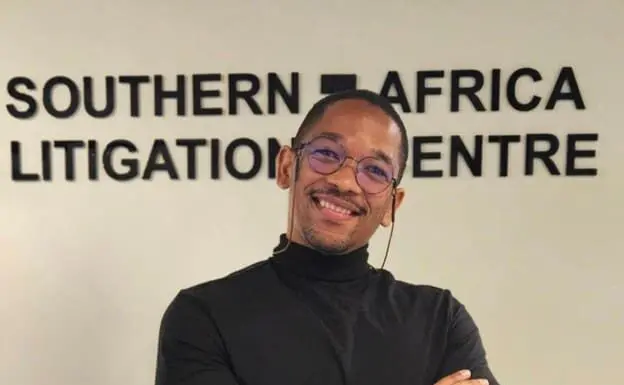
*Bradley Fortuin is a consultant at the Southern Africa Litigation Centre and a human rights activist.